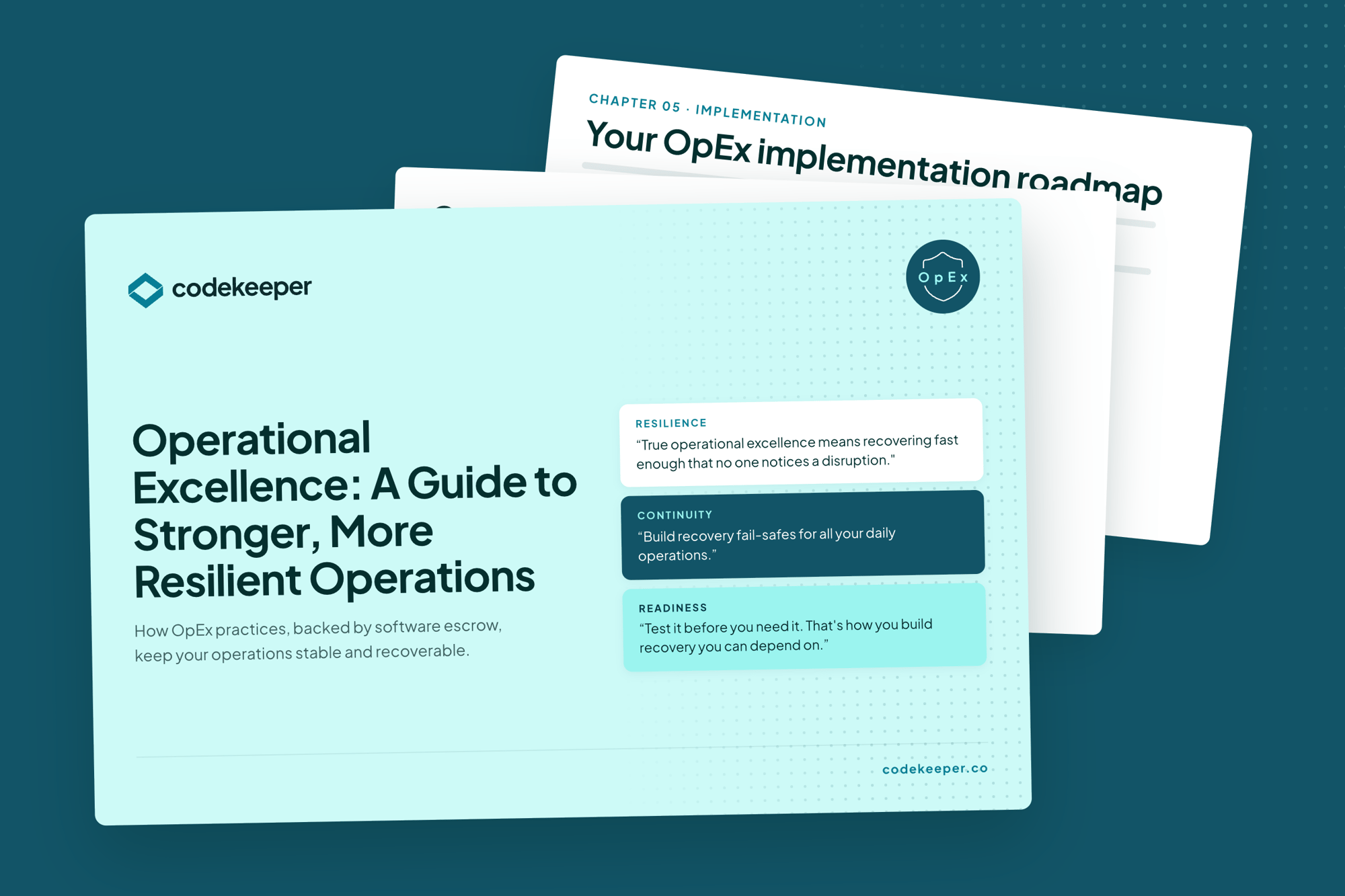
Operational Excellence
Achieve Operational Excellence with proven software resilience
Strengthen your processes, protect critical applications, and demonstrate strong operational control with Codekeeper’s software escrow and verification solutions.
Without clear, verifiable continuity evidence, organizations risk falling behind on operational standards.
OpEx: What you need to know
What is OpEx?
Operational Excellence (OpEx) is a structured approach that ensures organizations operate with consistency, reliability, and measurable control. It draws from frameworks such as Lean, Shingo, TPS, and Six Sigma, which emphasize reduced operational friction, standardized processes, and built-in resilience. Modern OpEx has become a key marker of operational maturity in audits, supplier assessments, and internal reviews.
Who needs to comply with OpEx?
Any organization aiming to meet industry-standard expectations for operational control, resilience, and audit readiness should align with OpEx principles. This includes:
Manufacturers & industrial operators
Logistics & supply chain organizations
Healthcare & life sciences
Financial services & fintechs
Technology, SaaS, and IT service providers
Utilities, infrastructure, and critical service organizations
While not compulsory, OpEx alignment signals reliability, stability, and readiness — positioning organizations more strongly in competitive and regulated environments.
Key OpEx requirements
Organizations aiming to demonstrate Operational Excellence are expected to:
1
Maintain documented, standardized processes
2
Conduct structured risk and impact assessments
3
Monitor operational performance using clear metrics
4
Reduce variation, waste, and failure points
5
Build quality and resilience into operational workflows
6
Ensure continuity and recoverability of core systems
7
Provide objective, auditable evidence of operational control
8
Manage vendor dependency and application availability
These expectations increasingly apply to third-party technology reliance, where continuity and access must be proven during assessments.
How software escrow bridges the gap to OpEx readiness
Software escrow strengthens OpEx by providing the recoverability, documentation, and resilience evidence expected in operational audits and supplier assessments.
OpEx risk
Dependency on external software with no fallback
Operational interruptions if a vendor fails or discontinues support
Insufficient documentation to demonstrate recoverability
Audit concerns around continuity and process control
Software escrow solution
Secures source code, data, and technical documentation
Provides a legal release mechanism if vendors become unavailable
Verifies the completeness and functionality of recovery assets
Maintains automated, audit-ready update trails
Compliance outcome
Strengthened operational resilience
Clear proof of risk-management controls
Demonstrated audit readiness for OpEx reviews
Assurance of continuous operations
With software escrow in place, operational standards translate into actionable protection, turning documented expectations into dependable, real-world capability.
Your partner in achieving operational maturity
Operational Excellence expectations continue to evolve, demanding stronger documentation, more reliable processes, and clearer evidence of continuity.
We see the challenges you face:
Evolving operational and documentation standards
Tight internal audit cycles
Expanding reliance on digital systems
Pressure to prove operational control and recoverability
Codekeeper helps organizations turn these pressures into clear, verifiable resilience proof.
Solutions that support your OpEx objectives
Each of Codekeeper’s escrow and verification services strengthens process control, operational resilience, and audit readiness across your most critical systems.
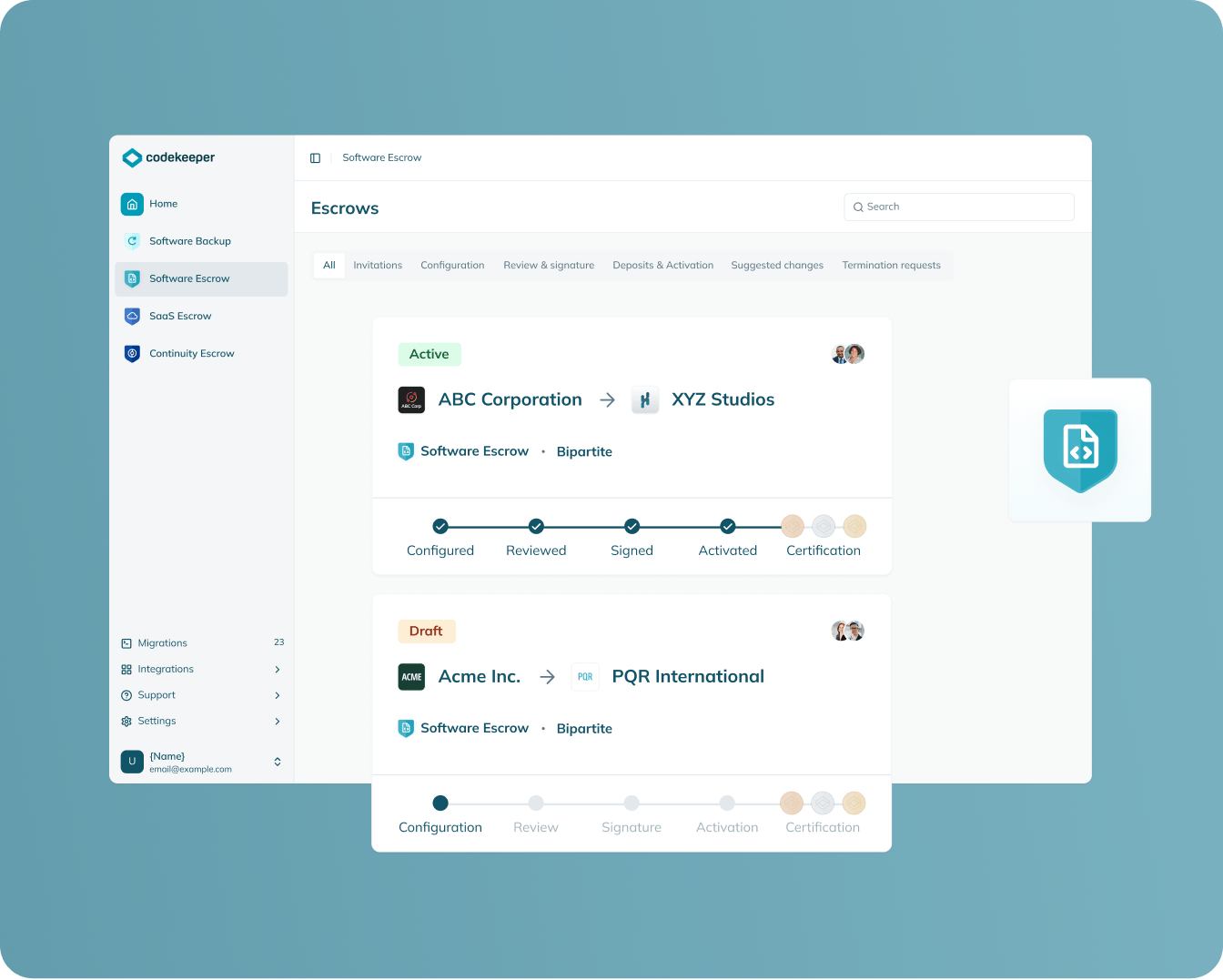
Software Escrow
Protection scope: On-premises software
Keeps essential on-prem applications available so operations stay consistent and uninterrupted.
Ensures continued access to business-critical software
Maintains operational stability during unforeseen disruptions
Provides verifiable documentation for audits and continuity reviews
Learn more
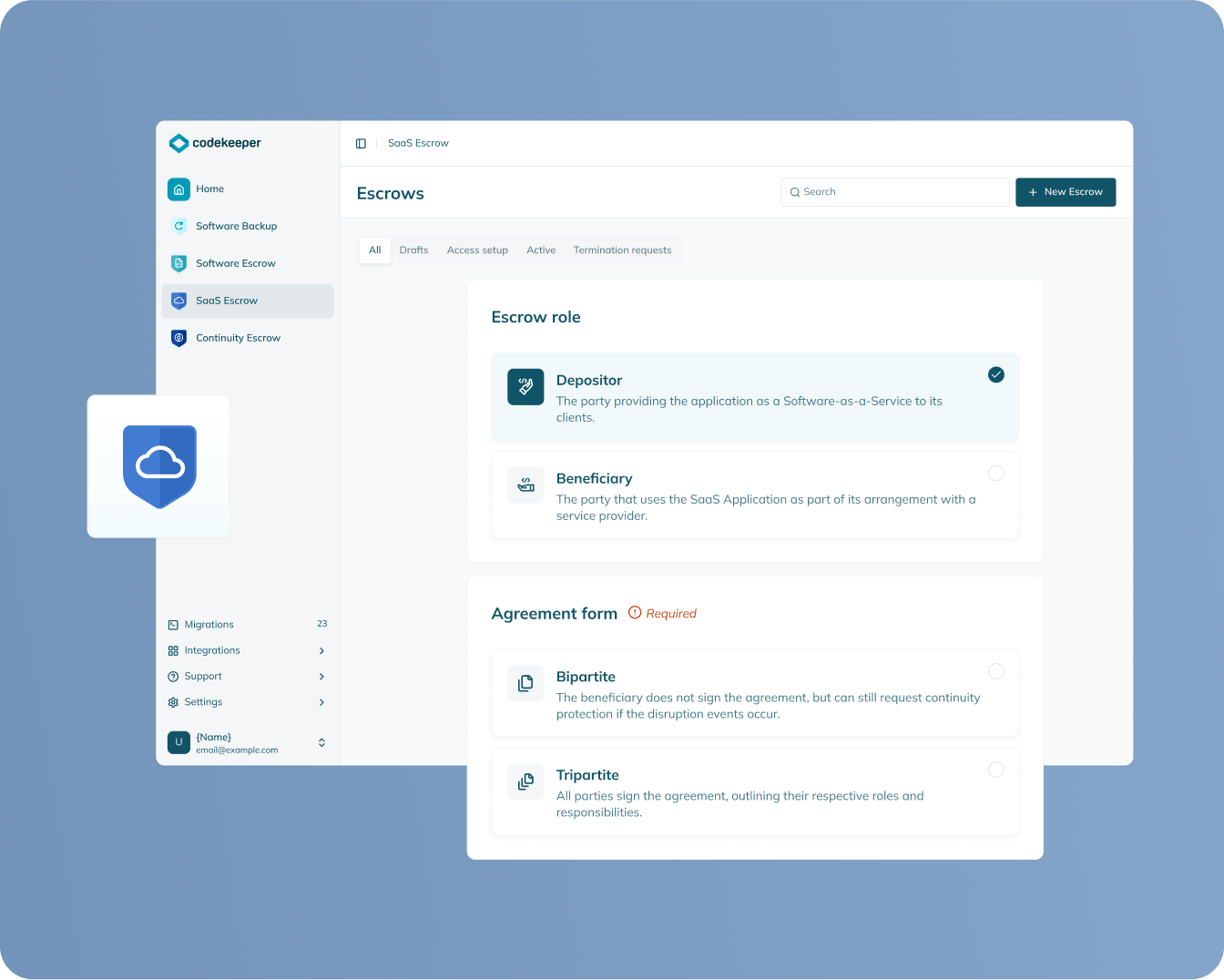
SAAS escrow
Protection scope: Cloud-based applications
Protects cloud systems and data by ensuring they remain available when recovery matters most.
Supports uninterrupted access to cloud platforms
Strengthens resilience across digital operations
Produces compliance and continuity documentation for audits
Learn more
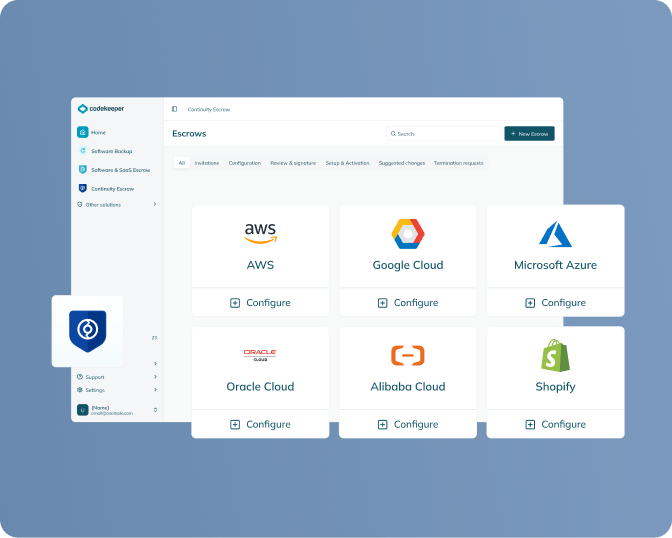
Continuity escrow
Protection scope: Supporting services & infrastructure
Keeps the operational environment running by maintaining access to hosting, infrastructure, payments, and ongoing service continuity.
Ensures key services remain active during disruptions
Covers ongoing payments to critical third-party services
Provides full continuity documentation for audit reviews
Learn more
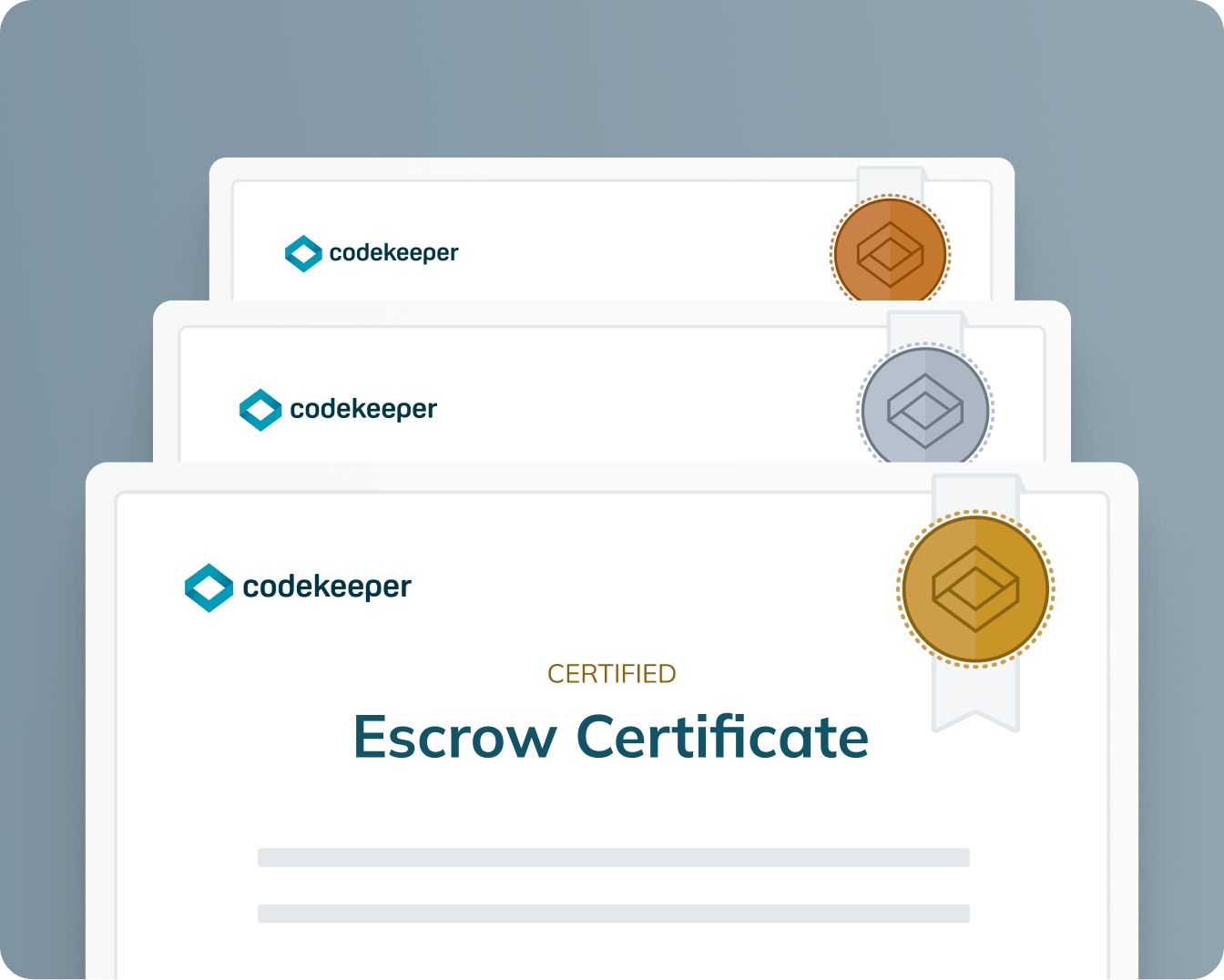
Verification
Protection scope: All escrowed materials
Confirms that your organization can recover and restart systems using complete, tested assets.
Verifies completeness and usability of escrowed materials
Confirms real-world recoverability
Issues Software Resilience Certificates for audit evidence
Learn more
Build OpEx resilience in 4 simple steps
Operational Excellence expects organizations to prove they can maintain consistent, controlled operations, even when disruptions occur. Here’s how Codekeeper helps you demonstrate that capability with confidence:
1. Book an OpEx assessment call
Identify which systems, applications, and operational processes are essential to your continuity framework.
2. Choose your protection level
Select the right escrow option: Software, SaaS, Continuity Escrow, or add Verification, that best supports your OpEx alignment goals.
3. We manage the setup and ongoing processes
Our specialists manage onboarding, legal agreements, and deposit automation — no effort required from your team.
4. Receive your operational resilience documentation
Get verified continuity evidence that supports OpEx-aligned audits, assessments, and internal governance reviews.
One assessment. One solution. A clear path to OpEx alignment.
Book a free demo
Build operational confidence
For 10+ years, Codekeeper has helped organizations across industries strengthen their operational framework, ensuring critical systems remain recoverable, documented, and dependable.
How OpEx practices evolved
-
1980s – 2000s: Foundations of OpEx
Lean, Six Sigma, and TPS establish process discipline, standard work, and quality control. -
2005 – 2015: The cultural era
The Shingo Model shifts OpEx toward principle-driven behaviour, organisational alignment, and leadership maturity. -
2015 – 2020: Digital transformation
Industry 4.0 integrates automation, IoT, and predictive analytics into operational systems. -
2021 – 2025: OpEx 4.0
AI-assisted improvement and resilience-first operating models reshape modern operational expectations.
1980s – 2000s: Foundations of OpEx
Lean, Six Sigma, and TPS establish process discipline, standard work, and quality control.
2005 – 2015: The cultural era
The Shingo Model shifts OpEx toward principle-driven behaviour, organisational alignment, and leadership maturity.
2015 – 2020: Digital transformation
Industry 4.0 integrates automation, IoT, and predictive analytics into operational systems.
2021 – 2025: OpEx 4.0
AI-assisted improvement and resilience-first operating models reshape modern operational expectations.
Risks of falling short of OpEx expectations
Although OpEx is not a formal regulation, failing to demonstrate strong operational practices can lead to serious business impact:
Extended downtime
Process deviations or vendor outages cause production or service interruption.
Audit findings
Gaps in documentation, continuity planning, or vendor-risk management.
Supplier assessment failures
Organizations may be removed from preferred-vendor lists.
Higher operational exposure
Unverified processes make it harder to respond to disruptions or scaling demands.
Loss of trust
Operational inconsistency erodes customer confidence.
Strong operations aren’t optional — they’re the backbone of trust.
How OpEx alignment benefits your organization
Continuous operational stability
Maintain consistent operations even if vendors or systems fail.
Audit-ready assurance
Provide documented proof of process control and resilience standards.
Strengthened customer trust
Meet expectations for reliability, continuity, and control.
Improved risk posture
Demonstrate clear, measurable recoverability standards.
Advance your operational resilience
Safeguard your applications, demonstrate operational maturity, and prepare for internal and client audits with confidence.
Protect mission-critical software
Strengthen recoverability
Provide audit-ready documentation
Reduce operational dependency risk
Frequently asked questions
What is Operational Excellence (OpEx)?
Operational Excellence is a structured approach that focuses on consistent performance, reliable processes, and measurable operational control across an organization.
Is OpEx a regulatory requirement?
No. OpEx is not a formal regulation, but it is widely used as a benchmark during audits, supplier assessments, and internal governance reviews.
Who should follow OpEx standards?
Organizations that rely on high uptime, quality-sensitive workflows, or repeatable operational processes — including manufacturing, logistics, healthcare, finance, and technology sectors.
What are the core principles of OpEx?
OpEx draws from frameworks such as Lean, Six Sigma, TPS, and the Shingo Model to drive consistency, eliminate waste, improve process reliability, and strengthen continuity.
Why is software escrow relevant to OpEx?
Software escrow ensures that essential software and operational systems remain accessible and recoverable, supporting OpEx expectations around continuity, control, and documentation.
How does OpEx differ from business continuity or ISO 22301?
OpEx focuses on daily process consistency and operational discipline, while business continuity and ISO 22301 focus on structured planning for disruptions. They work together but serve different purposes.
Can Codekeeper support OpEx alignment?
Yes. Codekeeper provides software escrow, continuity, and verification services that help organizations demonstrate stable operations, recoverability, and documented governance.
What happens if an organization does not meet OpEx expectations?
Teams may face audit findings, operational inconsistencies, supplier assessment gaps, or reduced confidence from customers and stakeholders.