Disaster Recovery
Map your software dependencies before one of them fails
Use our free disaster recovery toolkit to inventory your vendors, pinpoint vulnerabilities, and build a strategy that keeps your business standing through any crisis.
Join 3 500+ teams who've already protected their software
Are your dependencies putting you at risk?
With just five integrated vendors, you face a 93% chance that at least one will suffer a cyberattack or service failure. At around 10 providers, the risk of failure shoots up to 99%.
Vendors you trust are already failing
Vendors look stable because they've been running for years. But big or small, companies go bankrupt and get acquired. You need a plan if that happens.
Supply chain attacks will domino down to you
Your provider has rock-solid security. But they have vendors too. All it takes is one cascade attack to take down interconnected software, yours included.
Integrations break without warning
Your vendors backtest updates, but some integrations still fail. One breaking change can corrupt workflows you didn't know were connected.
Software risk should never lead to failure
When critical software fails, improvised solutions won’t cut it. We've spent 10 years helping 3 500+ businesses recover from their vendor failures, security breaches, and unexpected shutdowns. This toolkit contains the preparation strategies that kept them running.
Let’s plot out your disaster escape plan
Try our recovery planner to gain complete visibility into your software ecosystem — every vendor, every integration, every risk — so you can prepare before the next failure hits.
Catalog every critical dependency
Start by listing what you rely on: every vendor contract, API integration, and third-party service that keeps your operations alive. Once they’re visible, you can plan how to protect them.
Evaluate threats across your stack
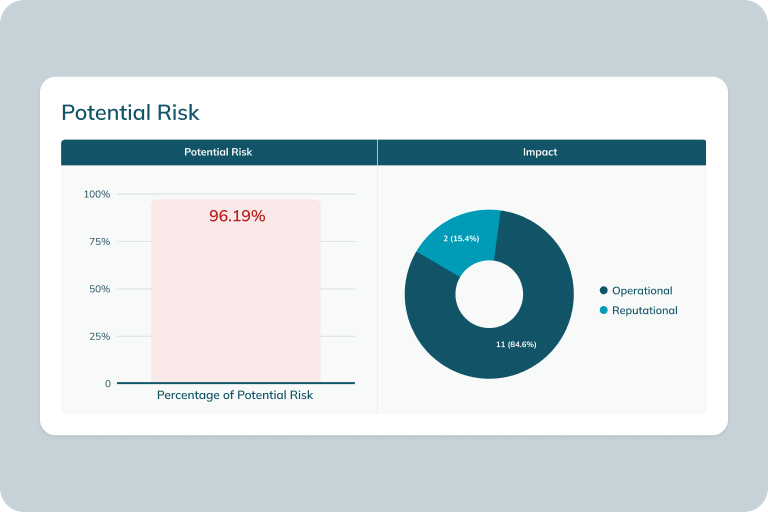
Then assess what would break first when dependencies fail. Rate the impact and likelihood for each vendor so you can spot which integrations put your entire operation at risk.
Design a step-by-step recovery strategy
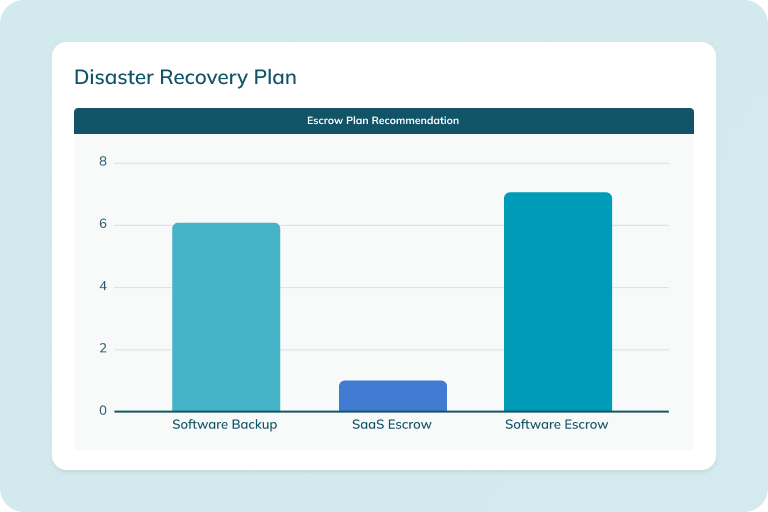
Define recovery procedures for every critical system. Assign owners, set priorities, and identify which assets need escrow protection to guarantee continuity.
Know exactly what you're protecting and where vulnerabilities hide
Prioritize mitigation efforts based on real risk calculations
Build documented procedures that work under pressure
Meet compliance requirements for ISO 27001 and SOC 2
From blind risk to documented defense in three steps
1. Claim your disaster recovery planner
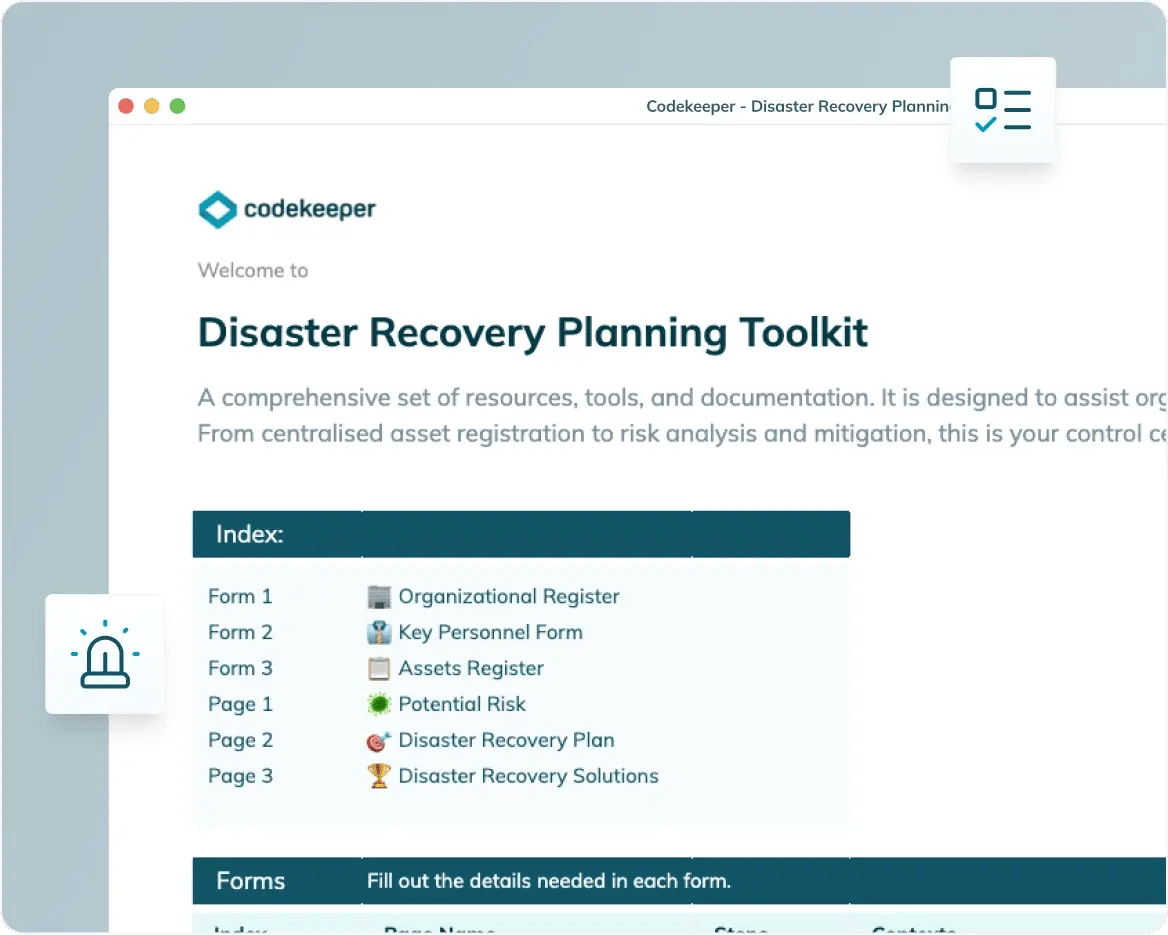
Register for free to download your toolkit. Inside are templates for cataloging assets, assessing vendor risks, and planning response strategies.
2. Find and fill in the gaps
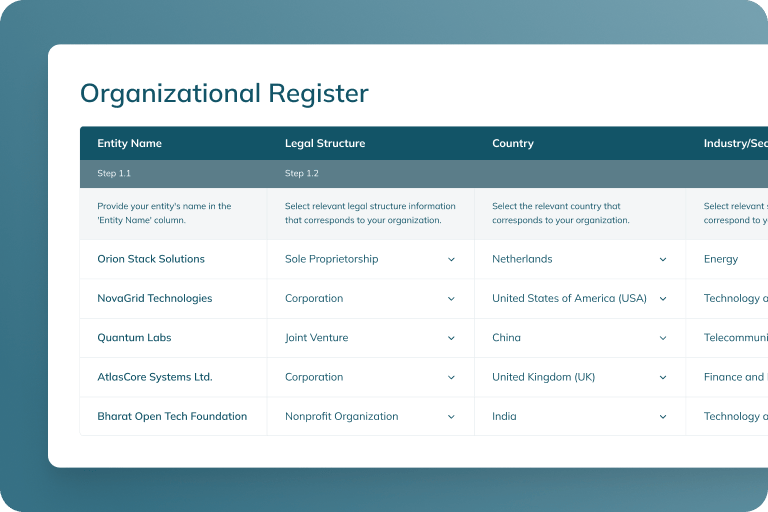
You can list company basics, key contacts, and assets with assigned owners. As you rate each failure’s impact, the toolkit will show you which dependencies demand immediate protection.
3. Secure your company’s future with escrow
Now that you've identified the threats, move high-risk dependencies into escrow to guarantee recovery. Schedule a call if you need help choosing which assets to protect.
Book a demo
What’s at stake without a recovery plan?
When you don't know what you're protecting or have a plan to recover it, you risk:
Data loss
93% of companies file for bankruptcy after 10+ days of data loss.
Financial setbacks
98% of businesses lose over $100,000 per hour of downtime.
Compliance penalties
Regulations like NIS2 and DORA fine up to €10 million or 2% of global revenue for poor continuity planning.
Extended recovery timelines
90% of smaller companies fail within a year if a recovery takes longer than five days.
Customer abandonment
77% of consumers end retailer relationships after encountering errors or downtime on a website.
Calculate your risk exposure
The more vendors you integrate, the higher your chance of one of them letting you down. Move the slider to see how vulnerable your systems are to failure.
Risk calculator
Vendor count
1
1
20+
Chance of zero incidents
0.58%
Risk of at least one failure
42.00%
Overall risk exposure
Critical
Severe
High
Moderate
The payoff of being prepared
A good disaster recovery plan brings peace of mind. Let’s say you downloaded the toolkit, escrowed the high-risk issues, and put fail-safes in place for the rest. Here’s how that would play out:
Your payment processor files for bankruptcy.
You have the source code in escrow, so you maintain operations and migrate on your timeline while competitors scramble to rebuild.
A supply chain attack compromises your vendor's infrastructure.
You mapped out every downstream dependency, so you isolate the exposure and switch to backup providers within hours.
A critical update corrupts client data.
You predicted it could happen, so you opted for a Software Backup of all your data. You restore everything before it affects your customers.
Take control of the unknown — secure your systems today
Stop scrambling for solutions during a crisis. Set up a proactive disaster recovery system with Codekeeper. Our toolkit will help you build:
Information assets list
Internal and external data management systems
Risk register (use for your ISO27001/SOC2)
Risk mitigation methods
Need protection for your software dependencies?
Explore our complete software resilience platform.
Software Escrow
Store source code, software data, and documentation to ensure recoverability.
Learn more
SaaS Escrow
Preserve access to cloud application components and deployment assets.
Learn more
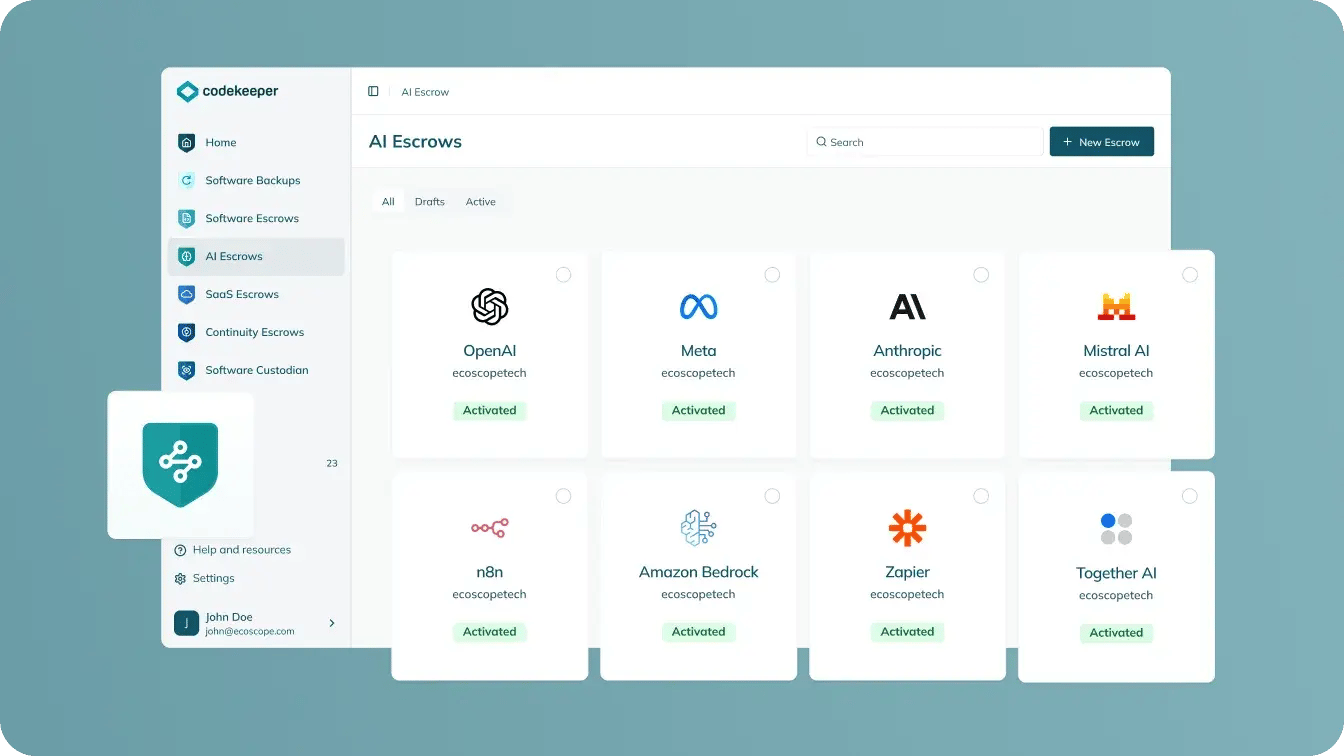
AI Escrow
Secure your AI stack’s model deployments, workflows, agents, and prompts.
Learn more
Continuity Escrow
Ensure uptime with full hosting and third-party service support.
Learn more
Software Backup
Keep three versions of your software and data with immutable audit trails.
Learn more
Frequently asked questions
What is the disaster recovery planner by Codekeeper?
Codekeeper’s disaster recovery planner is a free toolkit that helps you assess vendor risk and build recovery procedures. It provides structured templates to inventory your software dependencies, evaluate which ones could disrupt operations, and document what to do when they fail.
How can the disaster recovery planner help my business?
Our disaster recovery planner helps you identify and catalog your digital assets, assess their importance and risk levels, and choose effective mitigation strategies to protect your operations. It's specifically designed to ensure your assets are secure and your operations are uninterrupted.
Who should use the disaster recovery planner?
Any business that depends on third-party software, cloud services, or vendor integrations. If a supplier bankruptcy, security breach, or service outage could halt your operations, you need this toolkit.
Can I list all my digital assets and their locations with this tool?
Yes. The toolkit includes templates to document every software asset, vendor contract, API integration, and third-party service you rely on — along with who owns it, where it's hosted, and what would break if it disappeared.
Does the disaster recovery planner assess the risks my assets face?
Absolutely. You'll rate each dependency based on two factors: how likely it is to fail, and how badly it would hurt you if it did. This shows you exactly which vendors pose the highest risk to your operations.
How does this tool aid in proactive disaster recovery planning?
It forces you to document recovery procedures before you need them. Instead of figuring out what to do during a crisis, you'll have tested procedures, assigned owners, and clear priorities. This ensures your business can maintain continuous operations during upheaval.
Is the disaster recovery planner difficult to implement?
Not at all. You can register for your free account and start conducting a comprehensive assessment of your digital assets right away. Our tool is user-friendly and designed to facilitate easy implementation of proactive risk mitigation strategies.
What are the potential consequences of not using a disaster recovery planner?
Failing to prepare can lead to data loss, irreversible damage to your operations, financial setbacks, costly disruptions, liabilities, and reputational harm, including loss of client trust and business credibility.
How can I get started with Codekeeper’s disaster recovery planner?
Getting started is simple. , and you can immediately begin assessing your digital assets and implementing risk mitigation strategies. For tailored advice, book a call with our escrow experts to discuss your specific situation.
Can the disaster recovery planner integrate with other Codekeeper solutions?
Yes, the disaster recovery planner can be complemented with other Codekeeper solutions like Software Backup and Software Escrow to provide a comprehensive protection strategy for all your digital assets, ensuring they are securely stored and ready for quick recovery in any situation.