



Continuity Escrow Asset
Credentials escrow
Secure the credentials that let you reach, control, and pay for critical suppliers, so your software's continuity holds through any disruption.
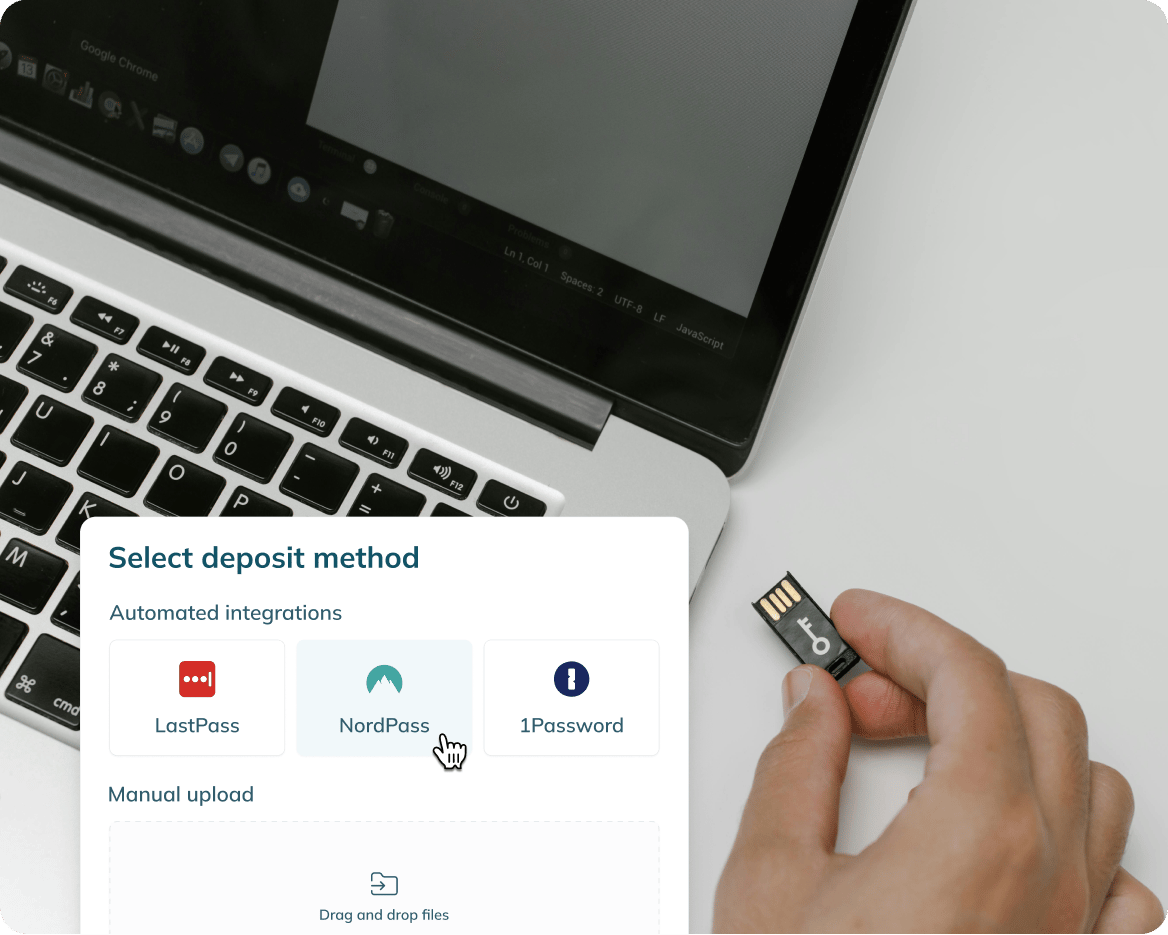
Point us at your preferred integration platform
Depositing credentials made easy. Codekeeper links directly with more than 50 hosting, billing, and infrastructure systems to pull deposits automatically. We provide clear steps for manual uploads if you need them.
View all integrations


What is credentials escrow?
Credentials escrow is a legal arrangement in which a software supplier places the logins, billing rights, and authentication materials needed to manage the platforms and services behind their application with an independent third party such as Codekeeper.
Codekeeper secures those credentials and activates them only when a contract-defined continuity event is confirmed, which can be used to keep essential services running until control returns to the supplier.
Credentials escrow forms part of Codekeeper’s wider
Continuity Escrow solution.
Why continuity needs credential protection
Reliable software never runs on its own. It leans on hosting platforms, billing systems, infrastructure tools, APIs, and third-party services. For companies subject to resilience requirements under DORA, FCA, or PRA, keeping those services running through a disruption is an obligation. Losing access to them can breach impact tolerances and cause failed audits.

How are critical services managed when internal access is lost?
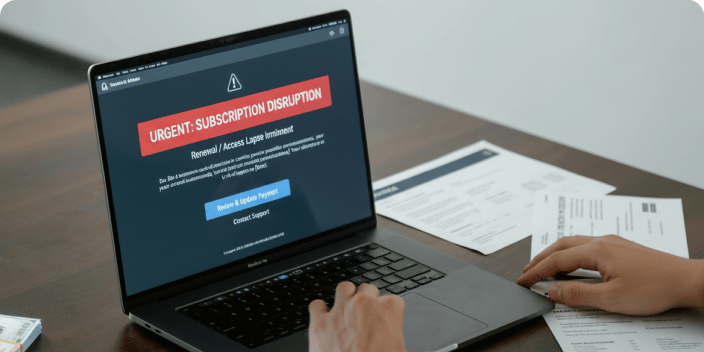
How do you prevent missed renewals or subscription payments when a disruption hits?

What keeps your supplier credentials current, organised, and ready to use?

How can all parties be assured that critical services will keep running?

Safe custody for your essential logins
Codekeeper holds the credentials needed to manage and renew the hosting accounts, billing portals, and third-party platforms your software runs on.

Continuity coverage for service payments
If a continuity condition is triggered, Codekeeper can draw on the escrowed billing access to cover renewals and stop your essential services from lapsing.

Deposit transparency for all parties
Depositors and beneficiaries can view which platforms and payments are held and monitored, giving firms under the FCA or PRA a clear line of evidence when auditors ask.

Hands-on support from setup to activation
Our support team helps with setup, continuity planning, and guided actions during a confirmed event, so everything plays out exactly as defined in your agreement.
From software risk to resilience

“Excellent service. This is easily the best way to handle it for both yourself and the client.”

“Codekeeper is a new service for creating escrow agreements for code, specifying the legal circumstances where source code can be accessed.”

“Source code escrow is a great service, and one that ALL developers who do client contract work should look into.”


Without credentials escrow
Access to essential suppliers gets harder to coordinate
Services can go offline during transitions or internal changes
Lost credentials hold up operational decisions
Confidence slips when no independent recovery options exist

With credentials escrow
Supplier access is maintained and independently secured
Essential services keep running through continuity disruptions
Teams act faster because continued access persists
Confidence holds because all parties know critical services will continue
Build out your operational continuity coverage
Credentials escrow is one element of Codekeeper’s Continuity Escrow solution, built to keep your software's essential dependencies running by maintaining access, payments, and supporting services for up to 12 months while your recovery plans take effect.

E-BOOK
Learn how credentials escrow prevents service downtime
Read our in-depth overview of how Continuity Escrow guarantees uninterrupted operations during service disruption.
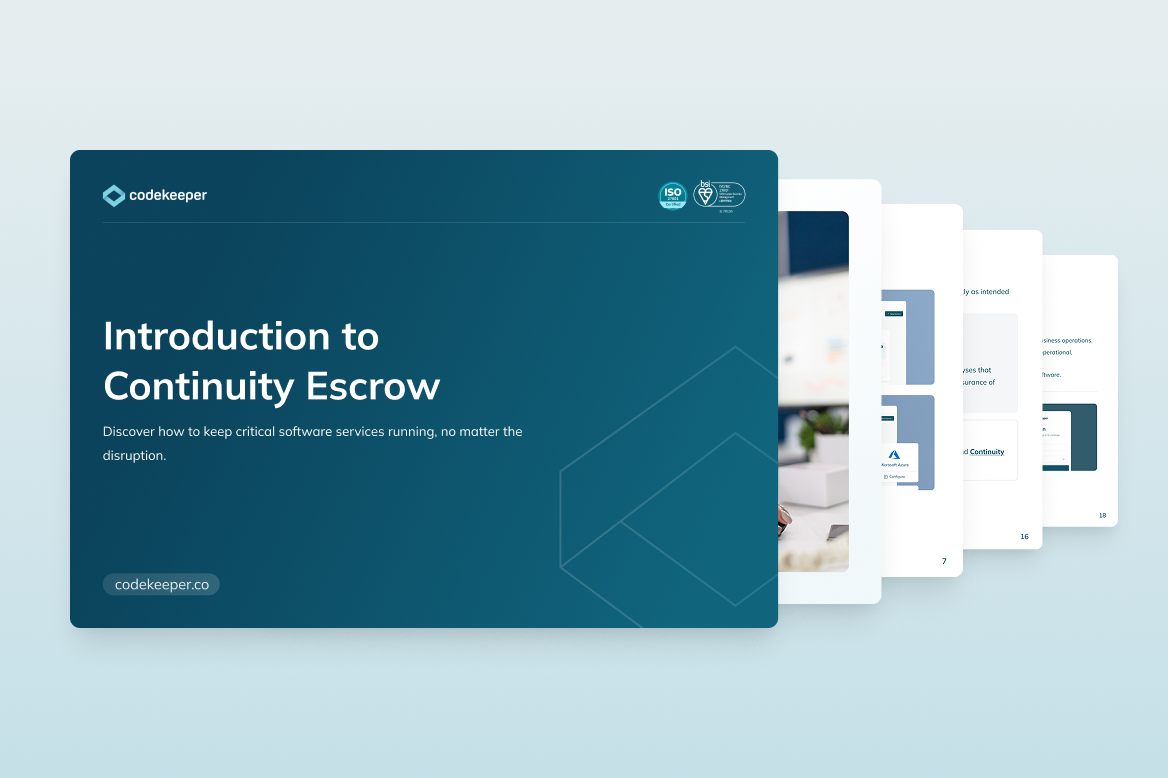
*E-book available only in English
Get your free introduction to continuity escrow
READY FOR Continuity
Guarantee access to your critical services
- Secure constant revenue by avoiding service-related downtime
- Preserve customer trust with uninterrupted service
- Prove service continuity ability under FCA, PRA, and many more
