On June 12, 2026, the US government handed Anthropic an export control directive, and within the same day two of its frontier models, Fable 5 and Mythos 5, went dark for every customer worldwide (Anthropic's statement). Anthropic didn't go bankrupt. It didn't raise its prices. The models people were using just stopped.
If your business runs on a third-party model, that's your risk too.
The shutdown exposed something most companies misunderstand: they assess AI vendor risk with the wrong yardstick. They vet a vendor's funding, its logo wall, and its uptime history. But none of that could have predicted what happened to Fable 5, because none of it had anything to do with what happened to Fable 5.
Your AI vendor doesn't have to fail for you to lose access
Most people picture AI risk as a vendor going under. A startup burns through its money, the lights go off, and customers are stranded. That does happen, and Builder.ai's collapse left clients scrambling for exactly this reason. But I'd argue it's the least compelling version of the risk, because it's the one everyone already underwrites. The Fable 5 case proves a vendor's health isn't the only factor that affects your software resilience. More nuanced scenarios include:
-
Governments can order a model (or any software for that matter) pulled, which is what just happened. Sometimes, it's not even a direct order; sanctions have the same effect.
-
A vendor can retire the model you built on. Even Google has shut down more than 200 products in the last decade because of changes in the market. When an AI service gets the axe, all you'll get is an announcement and a deadline.
-
Sometimes a vendor gets acquired, and their model's terms simply change, the price climbs, and the use case you depend on no longer fits the contract.
Notice what these have in common. The trigger sits outside the commercial relationship you negotiated. You can pick the most reliable vendor on the market and still lose access, because external decisions affect them too. That's the part the standard risk review keeps missing.
If you operate under DORA or NIS2, it's also the part auditors now expect you to plan for through documented, tested continuity contingencies for all critical vendor software (AI included).
Why a contract or a gateway won't save your stack
The usual AI resilience advice is to design around lock-in. Route your calls through a model gateway so you can swap providers. Add an abstraction layer so your code doesn't care which model answers. That's good architecture, and it solves a real problem.
But it's not going to help you in cases like Fable 5. A gateway can only route around a vendor while the model is still there to route to. Pull the model itself, and there's nothing on the other end for the abstraction layer to reach.
A contract clause runs into the same wall. An escrow or fallback term is worth exactly what was deposited and tested behind it, no more. If the deposit is months out of date or missing half the components, you've got a legal right to materials you can't use. The real gap for most teams is that nobody is holding a current, complete, recovery-ready copy of what makes their AI work.
I keep seeing that teams mistake portability for continuity protection. They're not the same thing. Portability is your ability to move when the door is open. Protection is what you fall back on when someone else closes it.
What "your AI stack" really includes
Ask someone what their AI depends on, and they'll say "the model." The model is one piece of it. What you've built lives across a set of connected parts, and any one of them can take the whole thing down.
Your stack includes:
-
Models: versions, weights, training data, and the credentials to reach them.
-
Prompts and agents: system prompts, prompt chains, agent definitions, and the fine-tuning parameters that took months to get right.
-
Workflows: orchestration, integration mappings, and the automation sequences tying it all together.
-
Deployment: settings, API configurations, routing rules, and access controls.
Lose one of these, and the capability won't rebuild itself. You can recreate the model and still be stuck because the prompt engineering is gone. You can keep every prompt and still be down because the deployment configuration walked out the door. You can only own, recover, and run what you've secured.
How AI Escrow keeps the capability you built
Software escrow has solved a version of this for decades. A neutral third party holds the materials you'd need to keep running if a vendor relationship ends, then releases them to you when an agreed condition is met. It's a proven model, and AI Escrow extends it to the whole AI stack rather than source code alone. My view is that this stops being an optional nice-to-have the moment AI moves from a feature you're testing to something your operations depend on. If you think about it, a lot of companies crossed that line a while ago.
Three things make it hold up against the kind of shutdown that hit Fable 5.
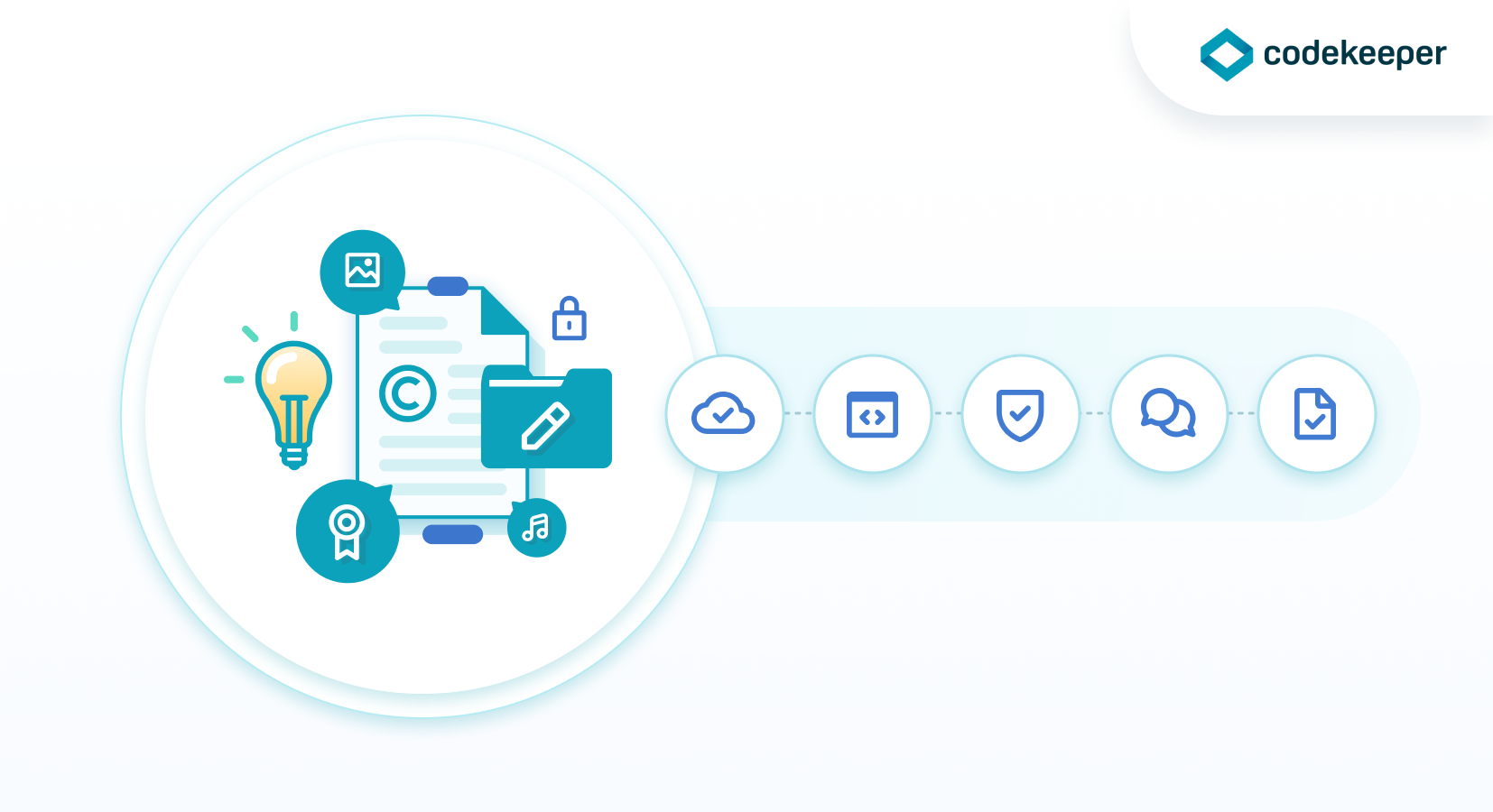
First, your deposit stays current. Codekeeper backs up your models, prompts, workflows, configurations, and data automatically every day across 50+ integrations. A snapshot from six months ago won't rebuild what you're running now, but a daily one will.
Second, the coverage spans everything, not just model weights. Prompts, agents, workflows, and deployment settings are all stored together, so you can recover, redeploy, or migrate with your work intact.
And, lastly, it gets tested thoroughly. Codekeeper rebuilds your stack from escrow and issues a Software Resilience Certificate confirming it works. That step does a lot of heavy lifting: when Codekeeper first verifies escrow deposits, almost none are complete or usable as delivered (Codekeeper). A backup you've never tested is an educated guess at best. A verified one is a recovery plan. It's the same tested, ISO 27001 certified protection that more than 3 500 companies already rely on to keep running when a vendor relationship ends.
It's not about whether your AI vendor is reliable
Anthropic is about as stable as an AI vendor gets. It's well-funded, it's everywhere, and it serves hundreds of millions of people. Yet, its customers still lost access overnight because of a decision made over the vendor's head.
So I'd retire the question of whether your vendor is reliable enough to bet on. The better question is whether you're holding what you'd need to keep running regardless of their reliability. If you build with AI, owning your stack is non-negotiable.
» Find out what protecting your full AI stack looks like for your business
Note: As of writing, Anthropic was working to restore access to Fable 5 and Mythos 5. Whether it comes back doesn't change the point. The access was gone, and no customer got a say.