


 European Union


 Global standards


 US

 UK

 Australia

 Netherlands

Software Escrow Asset
Document escrow
Keep the operational knowledge your software depends on secure by storing essential documentation in an encrypted, independent environment.
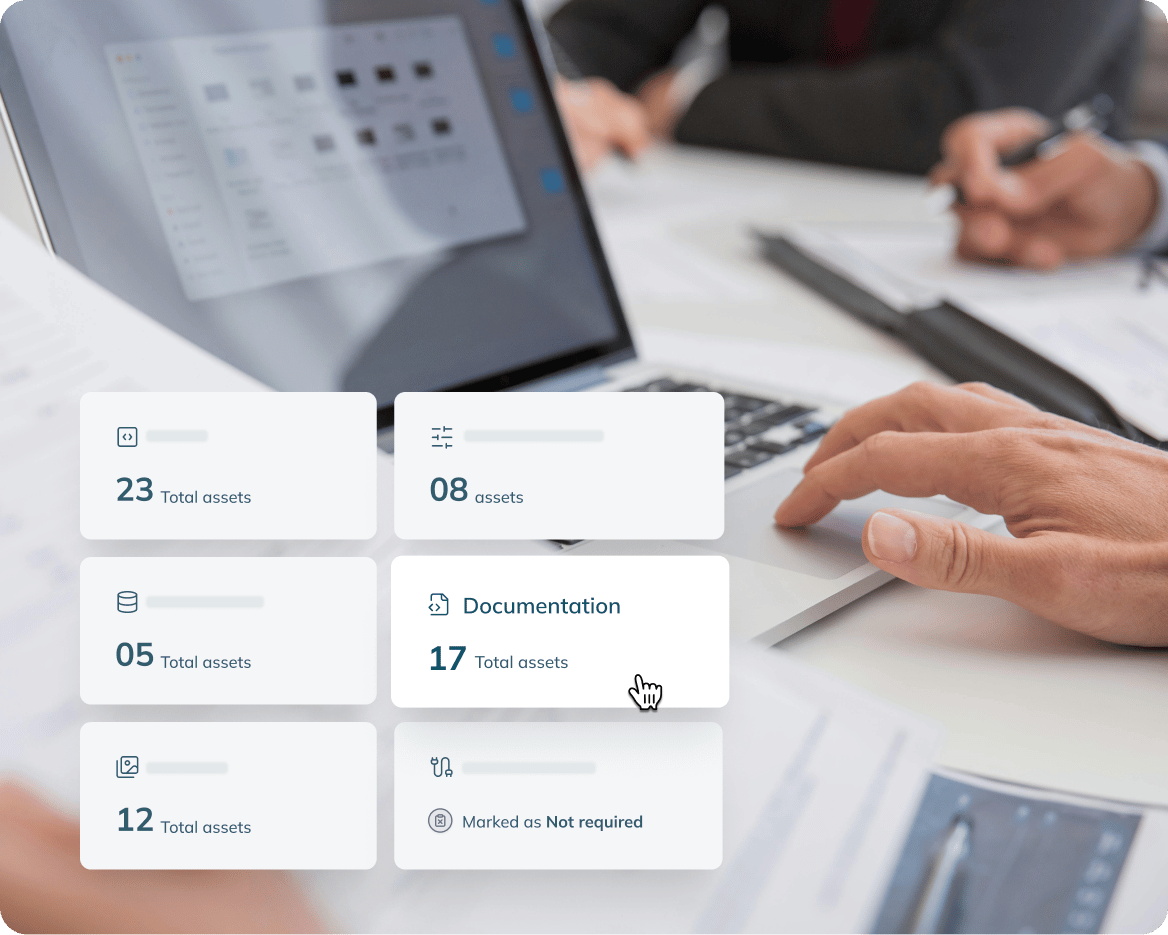
Link your documentation through any integrated platform
Depositing documentation shouldn't slow your team down. Codekeeper can sync through +50 storage and development tools so you can add, refresh, and manage assets without breaking your workflow.
View all integrations


What is document escrow?
Document escrow is a legal arrangement in which a software supplier places the documentation needed to operate, support, or rebuild their software with an independent third party such as Codekeeper.
If that information becomes unavailable after a defined release event, like a supplier liquidation, the escrowed documents can be handed over to the beneficiary so that they can initiate a recovery.
Document escrow is one of the asset types included within Codekeeper’s broader
Software Escrow solution.
Why your documentation needs protecting
Modern software runs on more than code. Without clear, accurate documentation, teams can't support, transfer, or restore the systems they depend on. For firms under DORA, FCA, or PRA operational resilience laws, losing access to critical documentation can lead to legal ramifications and failed audits.

What happens if you lose access to operational knowledge?

What are the consequences if configuration or setup steps are lost?

How can teams troubleshoot or maintain software without the correct processes?

How do you prove your documentation is current, accurate, and complete?

Unlimited synced deposits that keep your docs current
Codekeeper pulls updates automatically from your storage or development environment, so the right documents are always captured and preserved.

More tools to manage documentation escrow
Automated checks and optional verification confirm your documentation is intact, useable, and accessible for immediate recovery support.

Assured recovery support for affected parties
Recovery support for interpreting and using documentation, so recovery timelines align with the operational resilience requirements set by frameworks like the FCA and PRA.

Flexible monthly and annual plans that stay affordable
Choose between cost-effective monthly or annual options, so you're not forced into the annual-only contracts that many escrow providers still insist on.

Dashboard access for depositors and beneficiaries
Depositors and beneficiaries each get a clear view of deposit status, updates, and verification, keeping escrow management simple for both sides.

Support for every step of your documentation protection
From your first deposit to routine updates, Codekeeper's support team keeps your documentation ready for recovery whenever it's needed.
From software risk to resilience

“Excellent service. This is easily the best way to handle it for both yourself and the client.”

“Codekeeper is a new service for creating escrow agreements for code, specifying the legal circumstances where source code can be accessed.”

“Source code escrow is a great service, and one that ALL developers who do client contract work should look into.”


Without document escrow
Key instructions for running or restoring the software may be lost or out of date
Support teams cannot troubleshoot and resolve issues without essential procedural knowledge
Recovery slows and leans on individuals rather than documented processes
Missing context raises the risk of misconfigurations, downtime, or full rewrites

With document escrow
Critical documentation is stored in independent environments and remains accessible whenever needed
Support, onboarding, and recovery all move faster and more reliably
You can operate, maintain, and restore the software using accurate, verified materials
Software suppliers and users cut down on long-term operational and continuity risks
Protect every element your software is comprised of
Document escrow is just one of the asset types included in a Codekeeper’s Software Escrow agreement. Alongside source code, data, and configurations, Software Escrow preserves all the components required to operate, support, and recover your software.


E-BOOK
Need a deeper dive into how software escrow can help you recover?
Download our guide to learn how Codekeeper protects the components your software depends on.
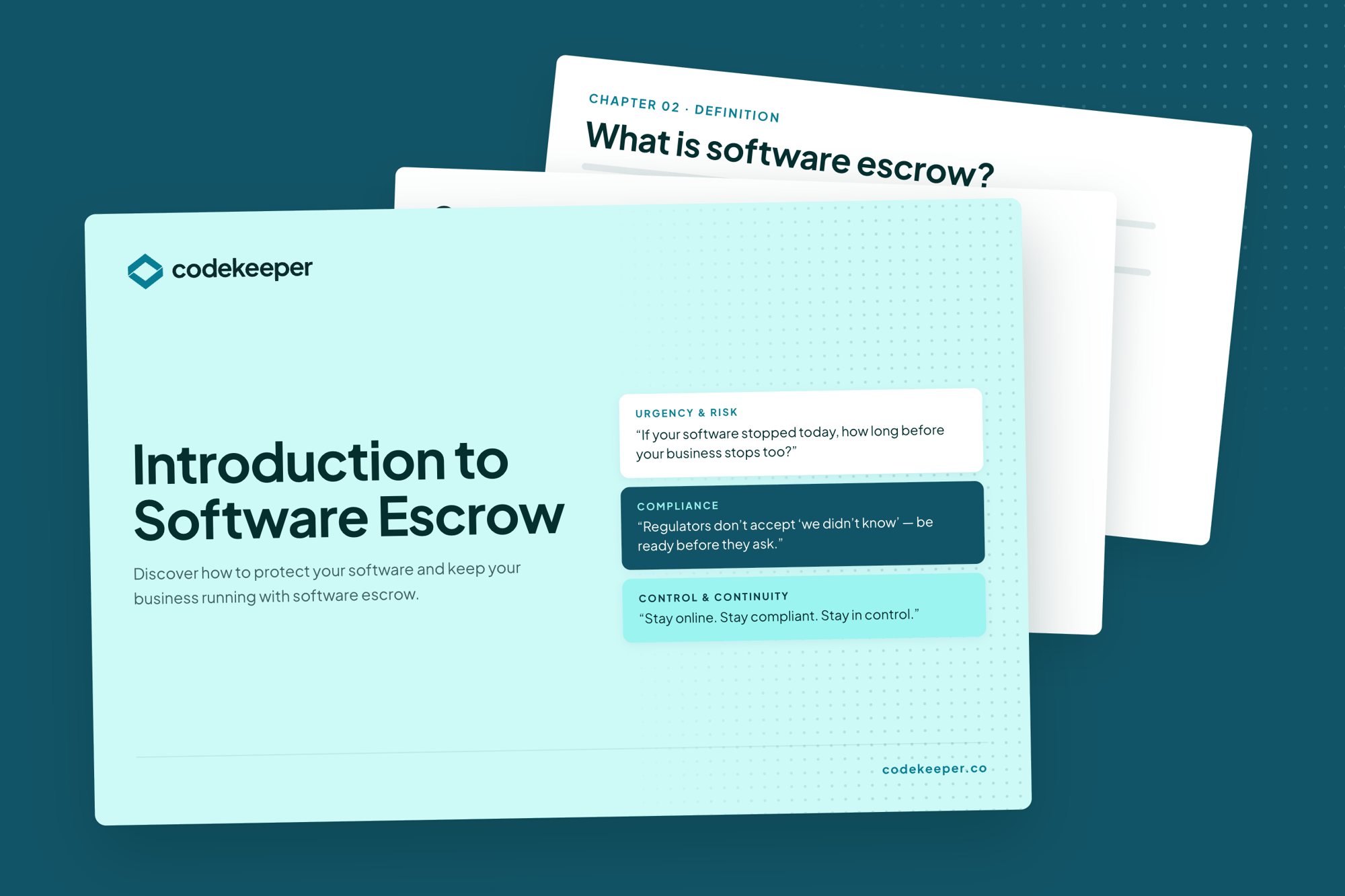
*E-book available only in English
Get your free introduction to software escrow
READY FOR RECOVERY
Safeguard the docs your operations depend on
- Structured deposits for the knowledge that matters
- A predictable recovery when documentation is out of reach
- Agreements drafted and live within 24 hours
