Skip to content
New Pro plans with Agentic Verification.

Software bill of materials. Know what your software runs on.

The applications you depend on are pieced together from components you didn't write. Get a CycloneDX component list with every Pro rebuild, so you patch faster, recover sooner, and pass audits without a scramble.

Book a demo
  • Software resilience for 3 500+ teams
  • Included with Agentic Verification
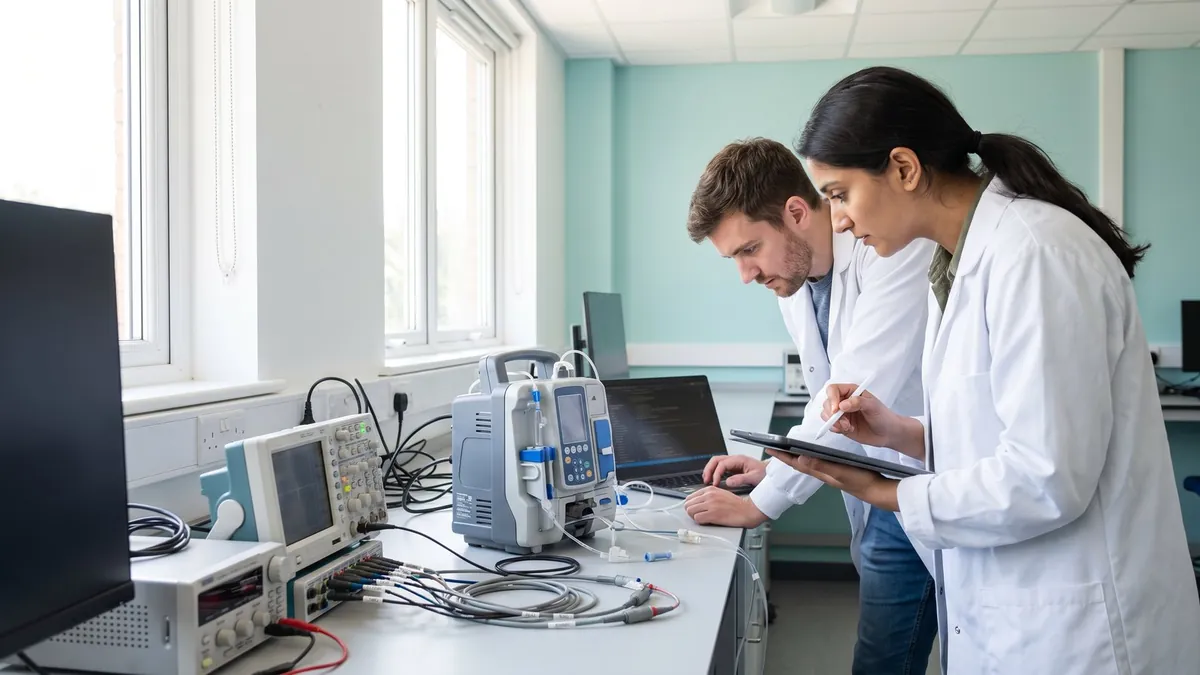
Product security engineers inspect a connected infusion pump in a medical-device lab
Software bill of materialsPayments Core · regenerated by run #12 · Oct 8, 2026CycloneDX
415 components
ComponentVersionTypeLicense
openssl3.0.13LibraryApache-2.0
log4j-core2.23.1LibraryApache-2.0
express4.19.2FrameworkMIT
zlib1.3.1LibraryZlib
ledger-core4.2.0Private packageProprietary
pdf-render-sdk9.1.0Licensed componentCommercial

Showing 6 of 415 components.

CycloneDXExample values. Names other than the open-source libraries are fictional.

Evidence for the frameworks that ask for a component inventory

Why our SBOM

Refresh your SBOM evidence with every rebuild.

If you rely on your SBOM to track vulnerabilities in a regulated industry, you can't afford for it to feed you false information. On every Pro plan, Agentic Verification rebuilds your critical applications, so each SBOM matches what you're running right now.

February

SBOM · Run #8

412

components · first run

CycloneDX
May

SBOM · Run #9

418

components · 6 added

CycloneDX
August

SBOM · Run #10

421

components · 3 added, 7 updated

CycloneDX
November

SBOM · Run #11

419

components · 2 removed, 4 updated

Latest

From the rebuild: what the build actually pulled inEvery run: up to four times a yearCycloneDX: the standard format

Example application. Names and values are illustrative.

What is an SBOM?

What's actually running in your software?

An SBOM is the ingredients list for your software: every library, package, and model it's built from, with the version, type, and license of each.

If you sell software.

Share it to clear buyers' security reviews and show regulators what you ship.

If you buy software.

Use it to spot vulnerabilities in the software you depend on, and to know what a recovery needs.

One SBOM entryExample values
Component
log4j-core
Version
2.23.1
Type
Library
License
Apache-2.0
For AI applications, the SBOM also lists models and datasets.

What you get

One list that answers the questions you get asked.

  • Every top-level component.

    Each one's name, version, type, and license, from the application as it was actually built.

  • Models and datasets for AI applications.

    With models and datasets listed, it meets the criteria of an AI bill of materials.

  • Built from a real rebuild.

    It captures what the build pulls in, including components that never sit in the repository.

  • Ready to share in CycloneDX.

    Export it in the standard format most security and compliance tools read, for buyers, auditors, or authorities.

  • A record of every run.

    Each SBOM stays in the vault beside the software it describes, for as long as your framework requires.

  • Add-on

    Component Watch.

    Get flagged when a new vulnerability affects a component in your SBOM, between runs.

Why you need an SBOM

Regulators now ask what your software is made of.

The CRA asks for it outright, as do regulators like the FDA. Other frameworks, like DORA and NIS2, don't name the SBOM, but they ask for the inventory it provides. They all agree you need a current component list to support continuity.

The CRA requires an SBOM.

Machine-readable, kept in your technical file, and handed over when authorities ask. Applies from Dec 11, 2027.

DORA requires a full software inventory.

A record of your software assets and how they connect, kept up to date. An SBOM is the most practical evidence for it. Applies now.

How it works

A fresh component list with every run.

Each Agentic Verification run on your Pro plan gives you a regenerated SBOM in CycloneDX format, so your compliance evidence stays current without extra work.

Sync your code and build files.

Connect your repositories through 50+ integrations and upload anything kept outside them. Your vault holds a current copy every day.

Policy Admin · Deposits
policy-admin-apiSynced todayCurrent
policy-admin-webSynced todayCurrent
build-config.zipUploadedCurrent

Start a run when it suits you.

AI agents work out how your software is built and rebuild it from the copy we hold, on Codekeeper's own models. Add anything they flag as missing, and the run completes.

Agentic Verification · Run #12
Work out how the software is builtDone
Rebuild from the depositDone
1 file flagged as missingUpload file
Generate SBOMWaiting

Collect your up-to-date SBOM.

Review every component your application was built on, including its version, type, and license, plus models and datasets for AI applications.

SBOM · Run #12CycloneDX
ComponentVersionTypeLicense
openssl3.0.13LibraryApache-2.0
log4j-core2.23.1LibraryApache-2.0
express4.19.2FrameworkMIT
zlib1.3.1LibraryZlib

Keep each SBOM beside your code.

Every list stays in the vault with the software it describes, for as long as your framework requires.

Policy Admin · Vault
SBOM · Run #12Oct 2, 2026Latest
SBOM · Run #11Jul 1, 2026Kept
SBOM · Run #10Apr 3, 2026Kept

Screens show example values.

Where your SBOM comes from

A list is a claim. A rebuild backs it up.

A list scanned from a repository can miss what the build actually pulls in. Yours comes from a real rebuild, by our agents or by our engineers.

Included in Pro plans

Agentic Verification. A current SBOM, up to four times a year.

Escrow Pro, Resilience Pro, Continuity Pro, and Software Backup Pro include up to four runs a year, on supported technology stacks, each started whenever you choose, and every successful run produces a new SBOM. Releasing often? Add extra runs, or Component Watch to flag new vulnerabilities in your components between runs.

Add-on to any plan

Exit Exercise. An SBOM of the software as recovered.

Our specialists recover your software from the deposit alone, without the vendor or the original developers, bring the data back, deploy it, and test the business functions you nominate. You get an SBOM of exactly what they brought back.

Sample evidence pack

Flip through an illustrative evidence pack.

It shows what a run produces, with example values.

What's at stake

You can't patch, recover, or prove what you can't find.

What happens without a current SBOM, and with an SBOM from every successful run, in operations and in compliance
AreaWithout a current SBOMWith an SBOM from every successful run
Operations
VulnerabilitiesAn exploited vulnerability turns into days of downtime while the team searches for the library to fix it.Affected applications show up in your component lists, so patching starts sooner.
RecoveryA recovery stalls, and the business stays offline while missing components are tracked down.The recovery team works from a list of what the build needs.
End of lifeAn unsupported component fails in production with no replacement planned.Replacements are planned long before support ends.
Compliance
AuditsAn audit ends in findings, and fixing them lands on your team's roadmap.Your inventory is already on file, in CycloneDX format. The audit moves on.
Security reviewsA buyer's security review holds up the deal while you chase answers.The SBOM goes into the buyer's questionnaire, and the deal moves forward.
EU market accessA missing SBOM can cost you EU market access, and fines under the CRA of up to €15 million or 2.5% of worldwide annual revenue.Your technical file holds the current SBOM the CRA requires for EU market access.
AuthoritiesInaccurate information given to authorities carries separate fines of up to €5 million or 1% of worldwide annual revenue.Every answer you give authorities draws on current information.

Take stock of your software. At every release.

Every release changes what's inside your software. Talk with our software resilience specialists today about keeping your component records current.

Frequently asked questions

Good questions to ask about SBOMs.

What is an SBOM?

An SBOM is an inventory of the components inside an application. The most accurate kind comes from a real build, which is how yours is produced, because it captures components that never sit in the repository.

Does the CRA require an SBOM?

Yes, the CRA requires an SBOM: manufacturers of products with digital elements must draw one up in a commonly used, machine-readable format, covering at least top-level dependencies. Its vulnerability reporting duties have applied since Sep 11, 2026, and its main obligations apply from Dec 11, 2027. DORA and NIS2 don't name the SBOM, but they ask for the inventory one provides.

What does the SBOM cover, and in what format?

The SBOM covers your application's top-level dependencies, meaning the components it's built on directly. For AI applications, it also covers the models and datasets they run on. It comes in CycloneDX, a standard format most security and compliance tools can read. You can export it to share with buyers, auditors, or authorities.

How often is the SBOM updated?

The SBOM is updated with every Agentic Verification run. Pro plans include up to four runs a year, on supported technology stacks, started whenever you choose. You can add more runs, or Component Watch to flag new vulnerabilities in between. The Exit Exercise also produces an SBOM of the software as recovered.

Do we have to make our SBOM public?

No, you don't have to make your SBOM public. Under the CRA, manufacturers hand their SBOM to market surveillance authorities on request, with no duty to publish it. Many vendors share theirs with buyers directly to clear security reviews.

Do we still need escrow if we have an SBOM?

Yes, you still need escrow if you have an SBOM. They do different jobs: the SBOM lists what the software contains, and escrow holds what it takes to recover it. Your SBOM is produced from the same deposit your escrow protects.