


 European Union


 Global standards


 US

 UK

 Australia

 Netherlands

SaaS Escrow Asset
IP escrow
Secure the designs, technical documentation, and other proprietary components your software runs on with escrow that offers a complete and up-to-date recovery path.
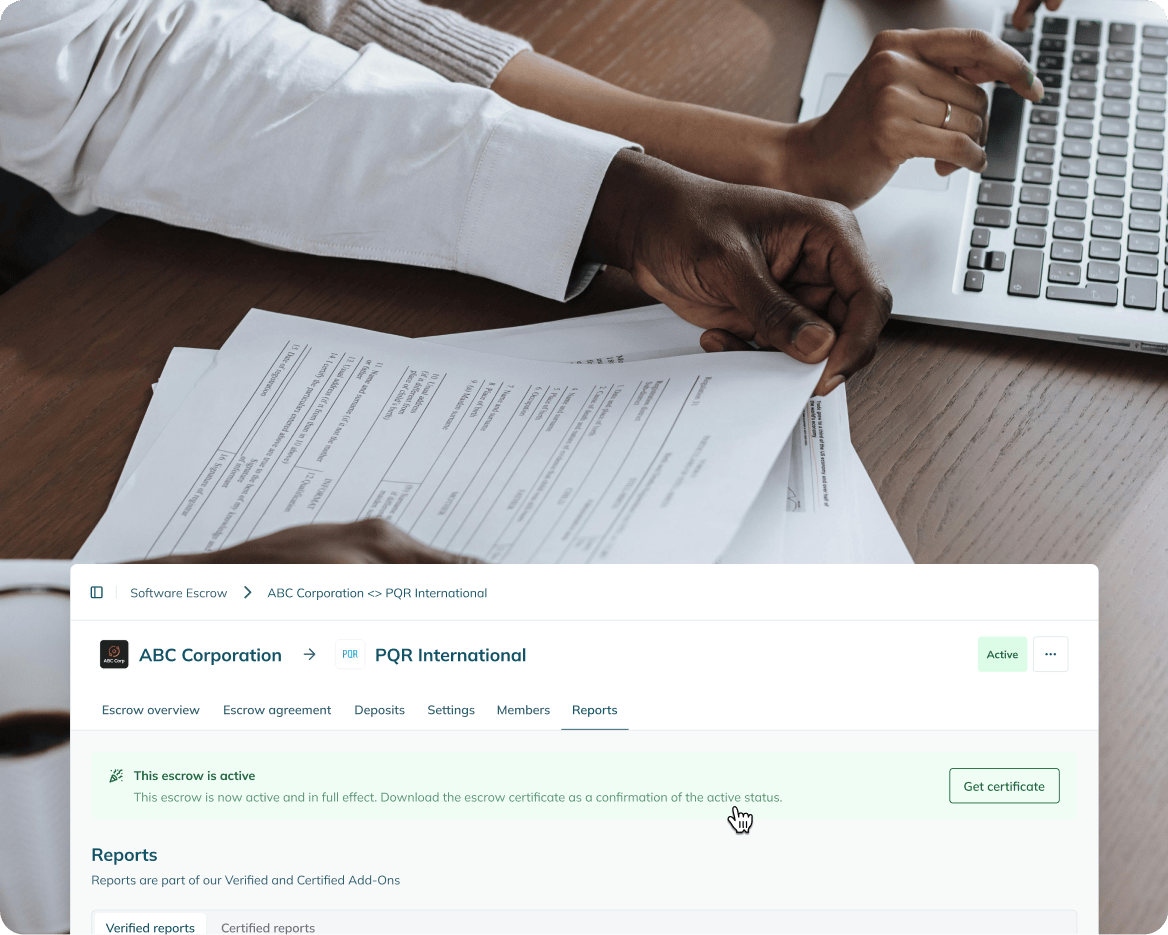
Connect your software protection to the tools your teams already run
You should be able to deposit proprietary materials with ease and at any time. Codekeeper syncs with your design, documentation, and development platforms, so you can secure your intellectual property without disrupting your workflow.
View all integrations


What is IP escrow?
IP escrow is a legal arrangement that places a software supplier's core intellectual property, from designs and documentation to proprietary technology, in the safekeeping of an independent party, such as Codekeeper.
Should that intellectual property become inaccessible, the agreement lets those materials pass to the beneficiary, so recovery, development, or operations can carry on.
IP Escrow makes up just one of the asset categories included in the protection Codekeeper’s
SaaS Escrow solution covers.
IP escrow is also used to evidence operational resilience. Firms under FCA and PRA rules are expected to map and manage third-party dependencies, and an independent deposit of a supplier's proprietary IP gives you documented proof that an important business service could be restored.
What is at stake without IP protection
Suppliers building software and the organisations depending on it face the same exposure: when essential intellectual property becomes unreachable, it stalls development, slows recovery, and undermines long-term stability.

What happens if your intellectual property becomes inaccessible?

What can you show customers to confirm your IP is secure?

Could your team reconstruct and run your software if the core designs and algorithms were lost?

Whose job is it to keep your technical materials complete, accurate, and current?

Your IP stays current through unlimited, automated deposits
Link your storage, documentation, or development tools to Codekeeper, and let us run the automated deposits, so every version of your IP is preserved without it eating into your time.

One flexible structure that adapts to any IP asset you hold
Whether it is a design file, a diagram, an algorithm, technical documentation, or configuration material, Codekeeper accepts every format you need to rebuild or keep your software running.

Verification choices that confirm nothing is missing
You can add optional verification checks that prove your deposited materials work and match the IP required for a successful recovery after a release event.

Visibility and control over access for depositors and beneficiaries
All parties receive dashboards showing deposit information, verification reports, agreement terms, and recent update activity.

Step-by-step support during release events
Should a release event occur, Codekeeper stands behind all parties, checking the conditions are met and helping the IP change hands safely and accurately.

Flexible plans, billed monthly or annually
Codekeeper runs on adaptable subscriptions that make escrow management straightforward, free of the rigid year-long lock-ins so typical among other providers.
Beyond software risk, resilience

“Excellent service. This is easily the best way to handle it for both yourself and the client.”

“Codekeeper is a new service for creating escrow agreements for code, specifying the legal circumstances where source code can be accessed.”

“Source code escrow is a great service, and one that ALL developers who do client contract work should look into.”


Without IP escrow
Recovery is delayed
Outages can stall businesses
Missing IP drives up costs
Customer trust erodes

With IP escrow
Estimated recovery timelines hold
Access to critical IP is never lost
Exposure is mitigated
Independent oversight earns customer confidence
Protect every layer of your SaaS
IP escrow forms one strand of SaaS Escrow, the wider Codekeeper solution that safeguards every element behind your SaaS and cloud services: its core IP, deployment materials, and third-party dependencies needed for recovery.

Source code escrow
Secure copies of the source code needed to rebuild, run, and support your software.
Learn more

Data escrow
Keep the application data and configuration files safe and ready for a clean restore.
Learn more

Document escrow
Preserve the technical documentation and materials required to rebuild or run the software.
Learn more

Third-party dependencies escrow
Capture the information required to oversee and control external services and integrations.
Learn more

Deployment assets escrow
Store the build scripts and operational assets that enable you to redeploy your environment.
Learn more
E-BOOK
Explore the recovery and resilience that SaaS Escrow reinforces
Grab our guide for a closer look at how SaaS Escrow keeps the critical parts of your service recoverable.
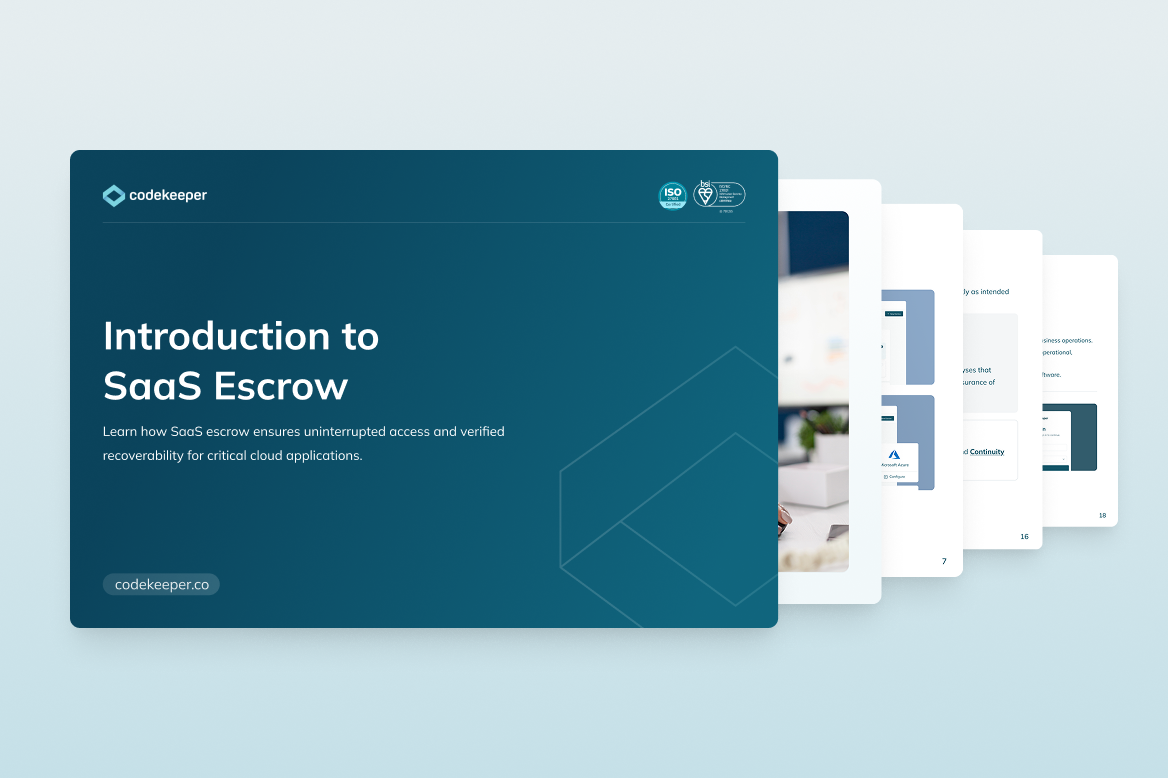
*E-book available only in English
Get your free introduction to SaaS escrow
READY FOR RECOVERY
Escrow your IP for safekeeping
- Automated and unlimited deposits
- Legal agreements drafted for you within 24 hours
- Resilience built around your essential software
